← Back to Case Studies
Requirements Review Automation & Compliance Dashboard
A multi-stage automation system that transformed a manual, error-prone requirements review process into a self-running compliance engine with executive visibility, achieving two consecutive years without an SLA violation.
At a Glance
The Challenge
Requirements review is a critical gate in the engineering development process. Tracking compliance was entirely manual: a co-chair hand-combing through documents, tabulating missed reviews, and drafting follow-up emails one by one. There was no defined SLA, no automated notifications, and no leadership visibility into which teams were lagging. The process depended entirely on one person's time to function at all.
- 90% SLA compliance was an organizational OKR with no system in place to reach it.
- Teams had no clear target, no automated reminders, and no accountability outside of manual follow-up.
- Leadership had no visibility into bottlenecks or patterns of non-compliance.
My Role
- Worked with process owners to define a reasonable SLA, then led the effort to socialize and ratify it across the organization, including direct engagement with teams already lagging to ensure they understood the expectation and had a path to compliance.
- Built the full technical system: SQL stored procedures, automated per-team emails with escalating logic, and Power BI dashboards.
- Coordinated with infrastructure teams to formally embed the system in organizational process.
Solution Evolution
Built in three stages, each replacing manual effort with automation as confidence in the approach grew.
Stage 1: Manual Python + Manual Email
Python extracted compliance data from source documents; results were reviewed and emails sent by hand. Established the data model and validated the approach before investing further.
Stage 2: Manual Python + Automated Email
Email generation and delivery was automated. Scripts still required manual execution, but the notification burden was removed from human hands.
Stage 3: Full SQL Automation
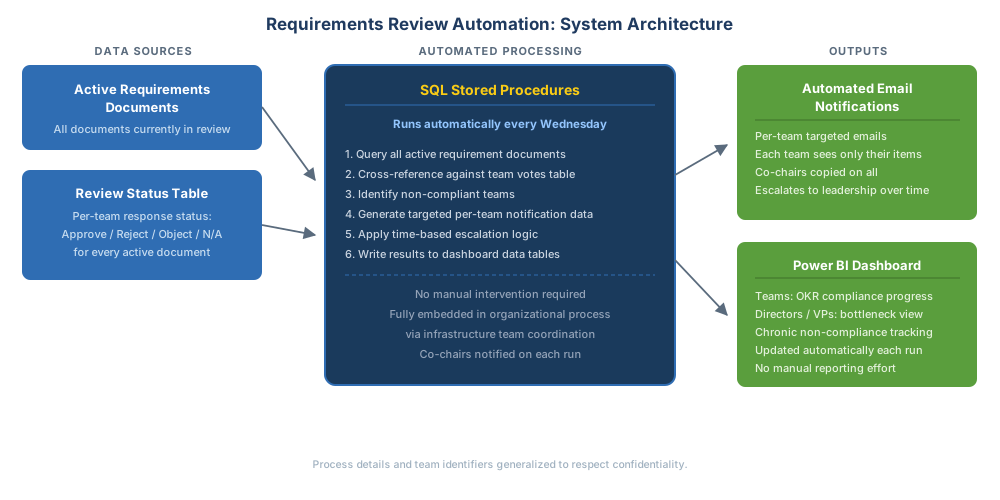
SQL stored procedures replaced the scripts and ran automatically each Wednesday, fully self-running with no manual intervention required.
How the System Works
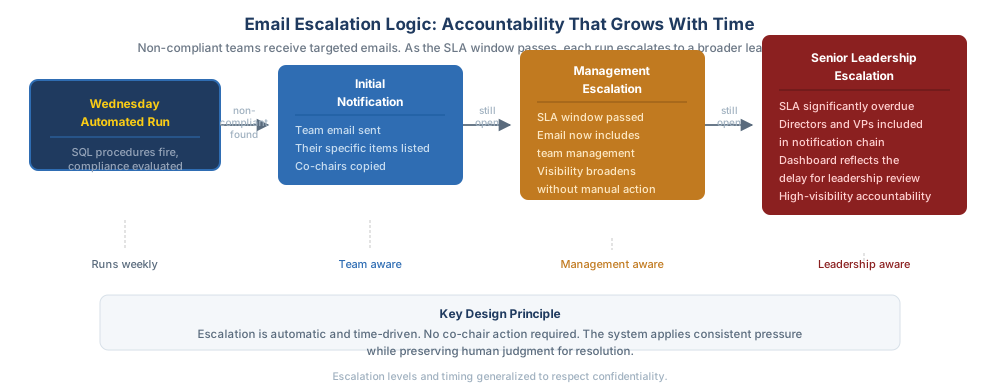
Every Wednesday, SQL stored procedures queried all active requirements documents and cross-referenced them against the review status table tracking each team's response: approve, reject, object, or N/A. Each non-compliant team received its own targeted email (not a group notification) listing only their outstanding items. As the SLA window passed without resolution, the system automatically escalated to progressively higher leadership levels with no manual intervention required.
All compliance data was written to tables powering a Power BI dashboard, updated automatically each run. Teams tracked their own progress against the OKR. Directors and VPs used it to identify chronic non-compliance and its downstream impact on review timelines.
Before & After
Before
- Manual document review to find compliance gaps.
- Hand-tabulated data and hand-drafted follow-up emails.
- No defined SLA for teams to meet.
- No leadership visibility into which teams were lagging.
- Process depended entirely on one person's time and attention.
After
- Fully automated weekly compliance runs.
- Per-team notifications with escalating leadership visibility.
- Ratified SLA with clear organizational expectations.
- Executive dashboard showing compliance trends and bottlenecks.
- Two consecutive years without an SLA violation.
Results & Impact
- Cut requirements review cycles by 50%.
- Increased SLA compliance by 45%, reaching and sustaining the 90% OKR target.
- Achieved two consecutive years without an SLA violation; my team was the only team in the organization to reach 100% compliance.
- Eliminated the manual tracking burden from the process owner team entirely.