← Back to Case Studies
Labs-as-a-Service Platform
A self-service portal designed to give engineers and lab staff controlled access to hardware for Ethernet validation, transforming scattered manual workflows into an efficient, modular system.
At a Glance
The Challenge: Fragmented Lab Access & Resource Waste
When COVID-19 disrupted lab access, validation engineers were left without a way to continue critical hardware testing. Labs-as-a-Service was created to support remote reservation, configuration, and monitoring of lab systems while reducing support burden and hardware waste.
- Manual ticketing and spreadsheets to reserve hardware.
- Idle or duplicated systems due to siloed ownership.
- Lack of shared inventory and usage data.
- Every team created and maintained separate workflows.
Target Users and Their Needs
- QA Engineers: Needed bulk reservations of hardware with specific test setups.
- Developers: Accessed 1–2 systems for feature development.
- Lab Admins: Maintained hardware and required full visibility into inventory.
- Stakeholders: Wanted usage insights for planning, budgeting, and utilization reports.
My Role: Systems Architect & UX Lead
- Defined the system architecture and role-based access model for the portal.
- Led UX research and design, including user interviews, task flows, Figma mockups, and final UI specs.
- Collaborated with validation teams, lab techs, and a principal architect to align backend constraints with front-end design.
- Established accessibility and layout standards for a modular, multi-role interface.
Solving the Problem: Building the LaaS Portal
The portal centralized lab hardware management behind a modular, role-based UX built around what each user needed to do, not how the lab was organized internally.
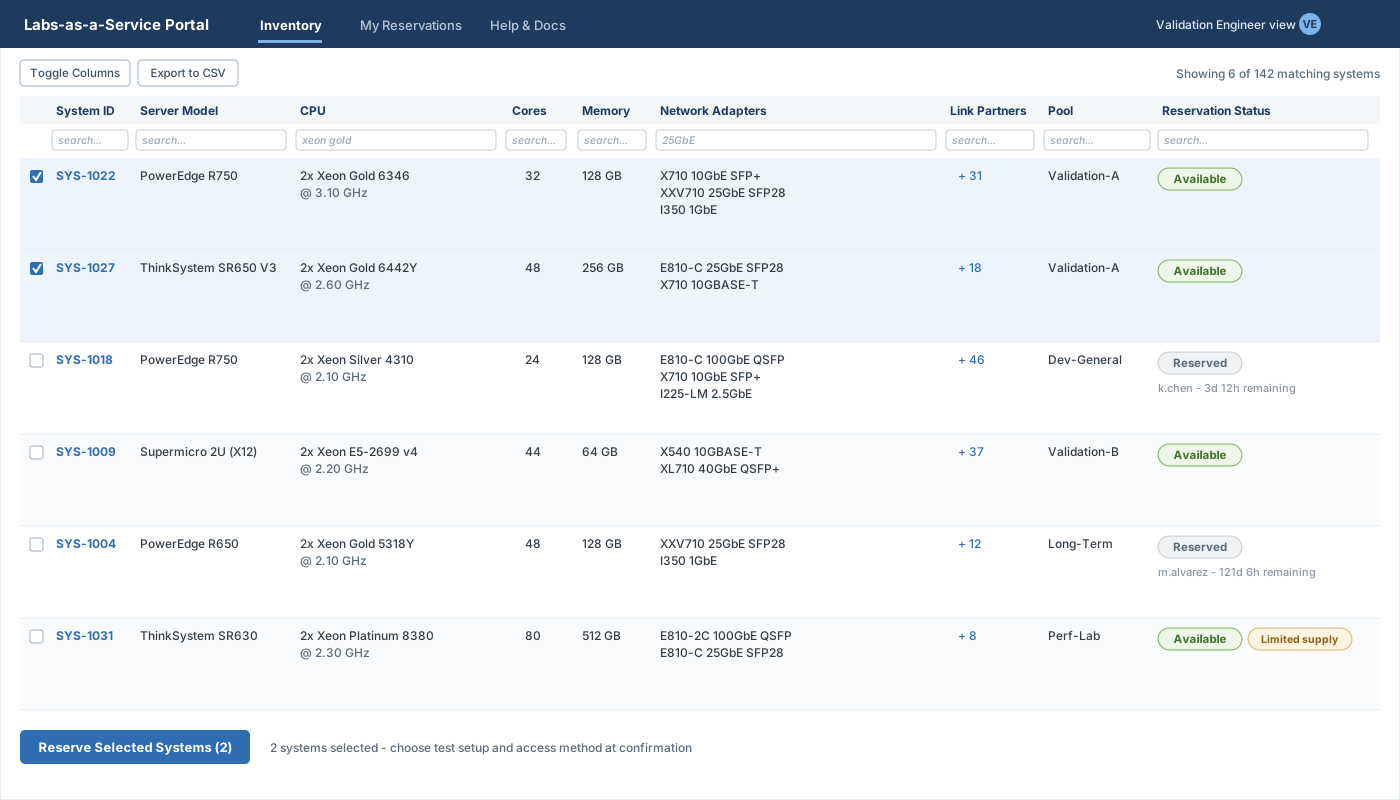
Design & Architecture Rationale
The core decision was to organize the portal around user intent rather than lab ownership. All four user types interacted with the same hardware pool but needed different levels of control and visibility. I mapped the full workflow from request through reservation, access, servicing, release, and reporting, which exposed where tickets, spreadsheets, and tribal knowledge were creating friction. The design separated self-service tasks from admin controls so engineers could move quickly without generating more support burden.
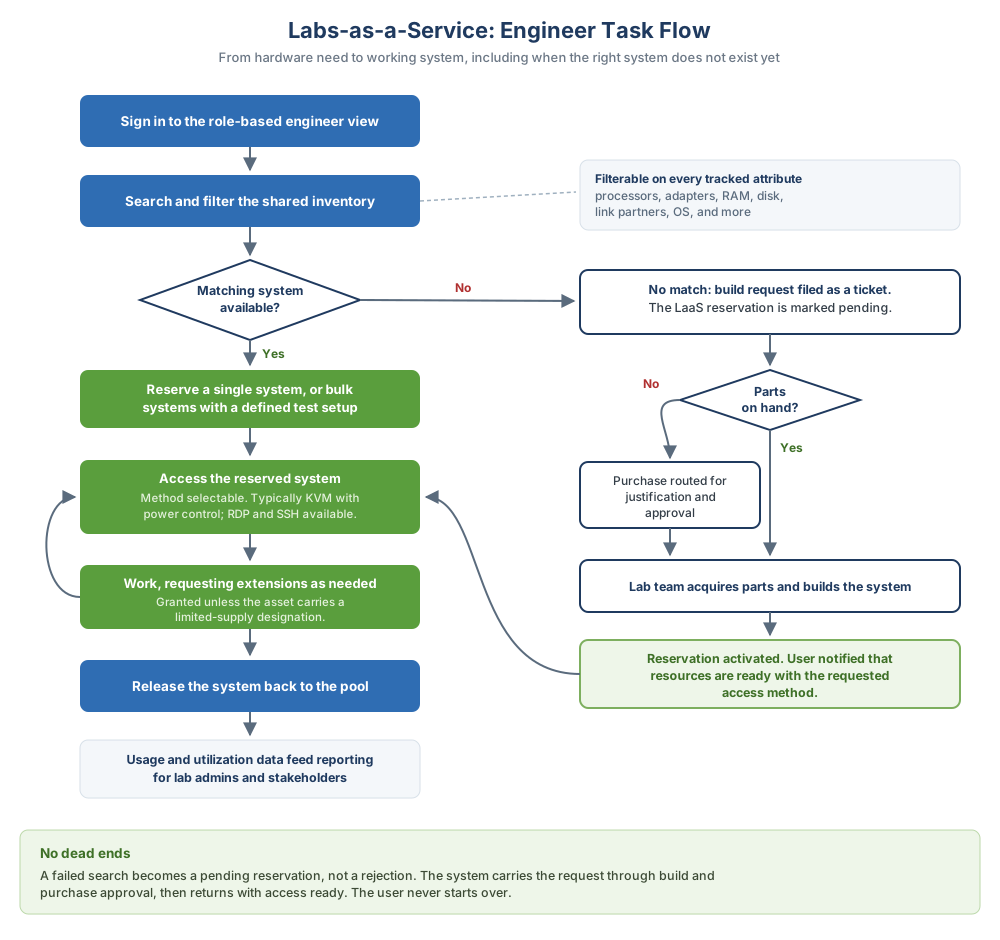
Key tradeoffs included:
- Keeping the interface simple while still respecting backend constraints such as system pools, permissions, hardware configuration, servicing status, and utilization reporting.
- Giving developers fast self-service access without removing the control lab admins needed to manage shared resources responsibly.
- Designing shared inventory and reservation views that could serve multiple teams without turning the portal into a cluttered admin console.
UX Architecture Flow (Visual Overview)
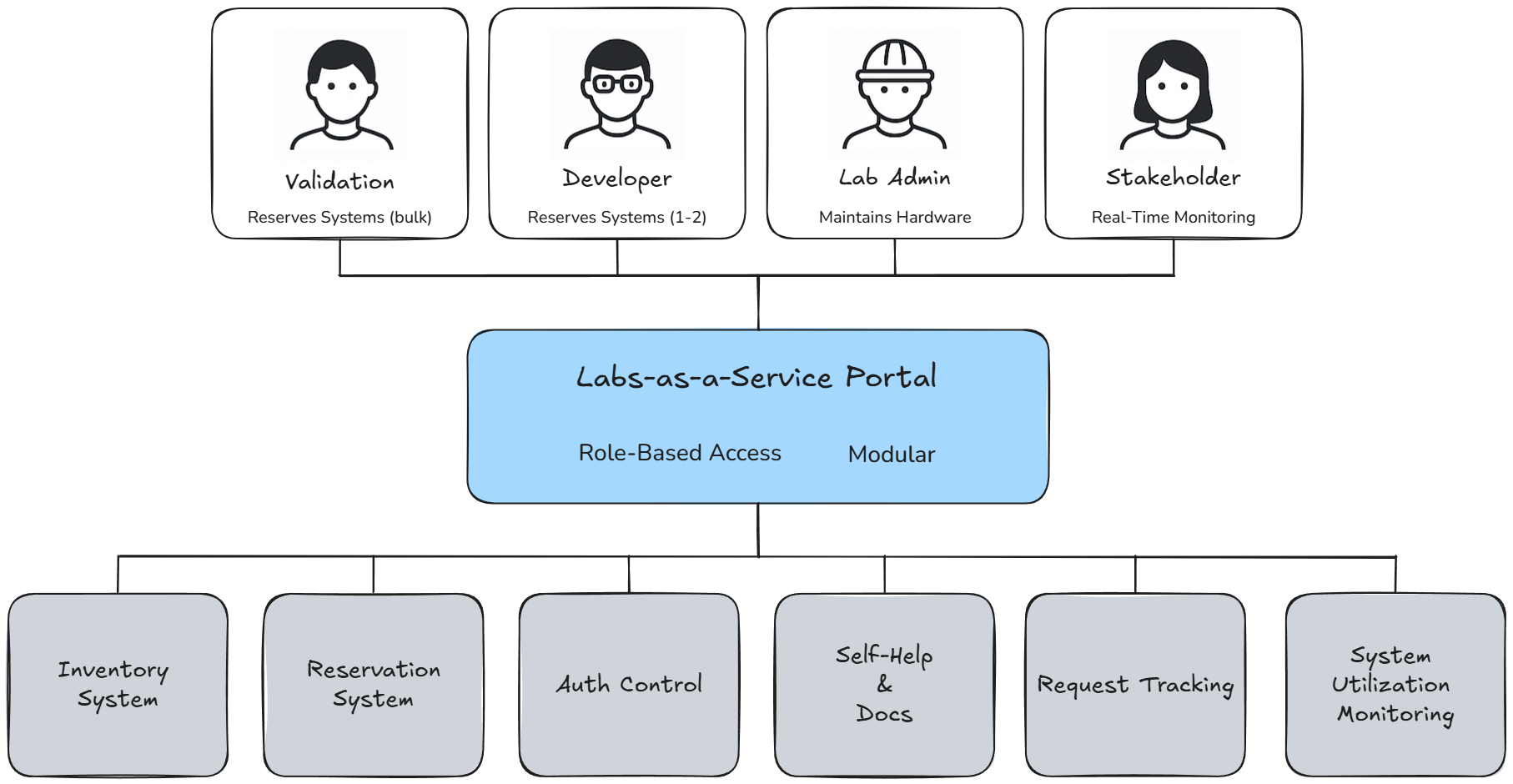
System view with role-based UX connected to backend services like inventory, reservation, helpdesk, and monitoring. Click to open full size.
Before & After
Before the Portal
- Email tickets for lab access.
- Manual spreadsheet lookups.
- Ad hoc scripts and tribal knowledge.
- Support required for routine provisioning.
- Unused hardware held due to poor visibility.
After the Portal
- Centralized self-service access.
- Current inventory and reservation status.
- Pre-configured test setups.
- Embedded help for common workflows.
- Shared pool with clear utilization visibility.
Results & Impact
- Cut support tickets and routine lab-access time by an estimated 30% through self-service workflows.
- Improved hardware visibility and reuse through shared inventory and reservation history.
- Enabled data-driven planning through utilization insights for stakeholders and lab admins.
Stakeholder Feedback
“This system is a game-changer. Finally we have visibility into our hardware and a seamless way to manage it.”
“The modular UX made it easy for engineers and admins alike, no extra training needed.”